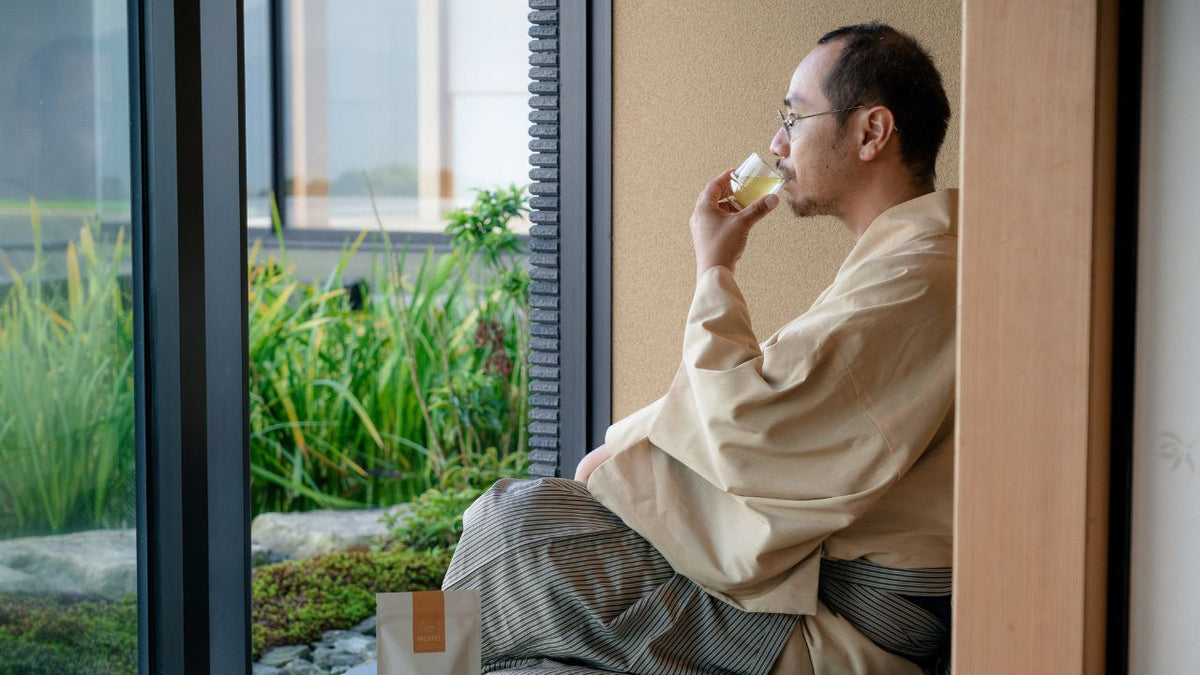
For many people, Sencha is the tea they are really meeting when they first discover Japanese green tea.
Across Japan, it has long been part of ordinary life: brewed at home, poured after meals, offered to guests. Its familiarity can make it easy to overlook. Sencha rarely carries the immediate mystique of Matcha or the reputation of Gyokuro, yet it tells us perhaps more about Japanese tea than either of them.
At first, the taste can seem straightforward. Fresh and green, perhaps a little sweet, perhaps brisk. Spend more time with it and the differences begin to appear. One Sencha can be delicate and aromatic, another dense and deeply vegetal. Some have a pronounced umami character; others finish with a pleasant dryness.
This range is one of the pleasures of Sencha. It is an everyday tea, but by no means an ordinary one.

Sencha is the most widely recognized style of Japanese green tea. Because it is so common, however, the name can give the impression of describing something fairly uniform. It doesn’t.
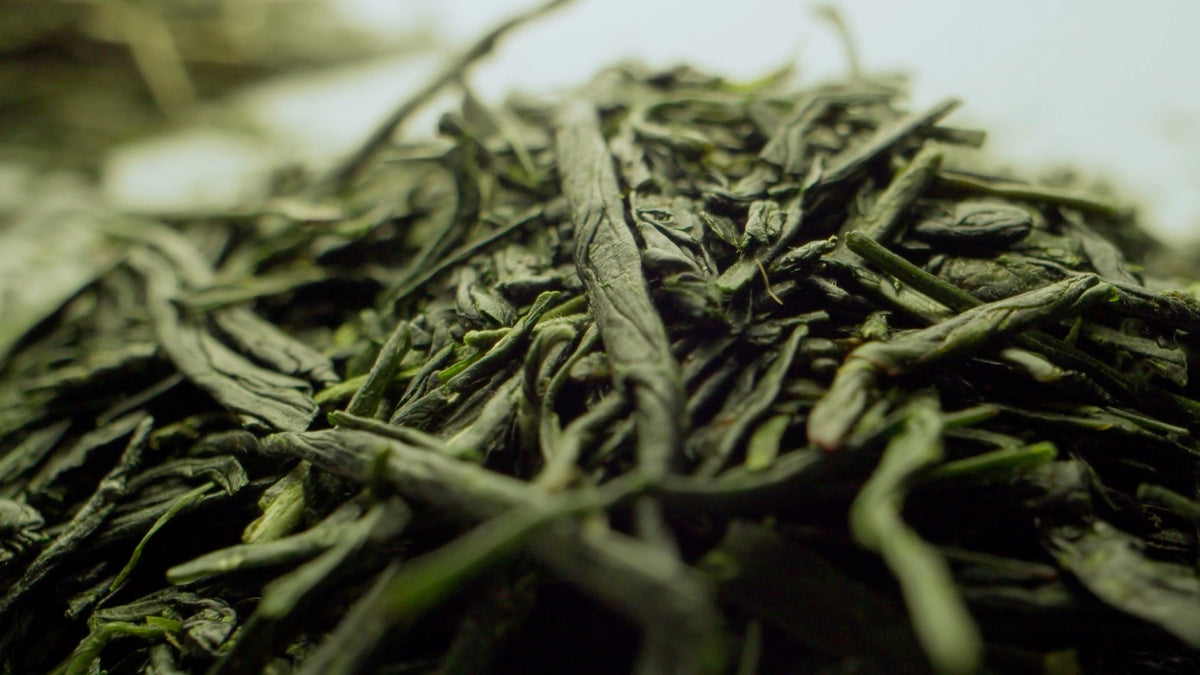
Sencha is principally defined by the way the leaves are processed. Soon after harvest, fresh tea leaves are heated to stop oxidation, most commonly with steam. They then pass through several stages of rolling and drying before taking on the slender shape associated with Japanese green tea.
Steaming is particularly important. While many Chinese green teas are heated in a pan, Japanese tea production developed around the use of steam. It preserves a distinctly green character in the leaf and has a considerable influence on the aroma, color and taste of the finished tea.
There is no single flavor that all Sencha must have. The common thread lies more in how it is made. Gyokuro and Kabusecha, for example, are distinguished in part by shading the plants before harvest. Matcha is made from tencha and ground into a fine powder. Hojicha develops its characteristic aroma and color through roasting, while Wakoucha, Japanese black tea, is allowed to oxidize.
Sencha follows a more direct route from fresh green leaf to finished loose-leaf tea. Within that route, producers have considerable room to work. Cultivar, growing conditions, harvest date, steaming time, rolling, blending and final firing can all change what arrives in the cup.
This is why two bags labelled Sencha may contain teas that look and taste surprisingly different. One might have long, intact leaves and brew to a pale, clear green. Another may consist of much finer leaves and produce a dense green liquor within seconds.
The name tells you what kind of tea you are drinking. There is still plenty left to discover after that.
Sencha’s importance in Japan is closely tied to its place in everyday life.
Tea does not always need an occasion. It can be made because someone has arrived at the house, because a meal has ended, because work has paused for a few minutes, or simply because there is a pot nearby. For generations, Sencha has belonged comfortably to these ordinary moments.
This relationship developed over a long period. Tea drinking in Japan had earlier associations with Buddhist institutions, the elite and, eventually, highly codified forms of tea practice. As tea became more widely consumed, other ways of preparing and enjoying it developed alongside those traditions.
An important moment came in 1738, when Nagatani Sōen of Ujitawara developed the processing method commonly regarded as the foundation of modern Sencha production. His approach to steamed and hand-rolled tea helped establish a style valued for the freshness and quality of the leaf itself. Sencha subsequently became deeply embedded in Japanese tea culture without becoming dependent on formal ceremony.
That relationship remains recognizable today. A good Sencha rewards care: the temperature of the water changes it, a few seconds of infusion can change it, and the same leaves can taste noticeably different from one brew to the next. But it can be prepared carefully on a quiet afternoon and just as naturally poured around the family table.
It also becomes a useful reference point when discovering other Japanese teas. Drink Gyokuro after becoming familiar with Sencha and its concentrated umami becomes more apparent. Move to Hojicha and roasting takes the experience somewhere entirely different. With Kabusecha, you begin to notice what shading does to sweetness, aroma and texture.
For many people, Sencha is where the vocabulary of Japanese tea begins.
Much of Sencha’s character is decided in the hours following harvest.
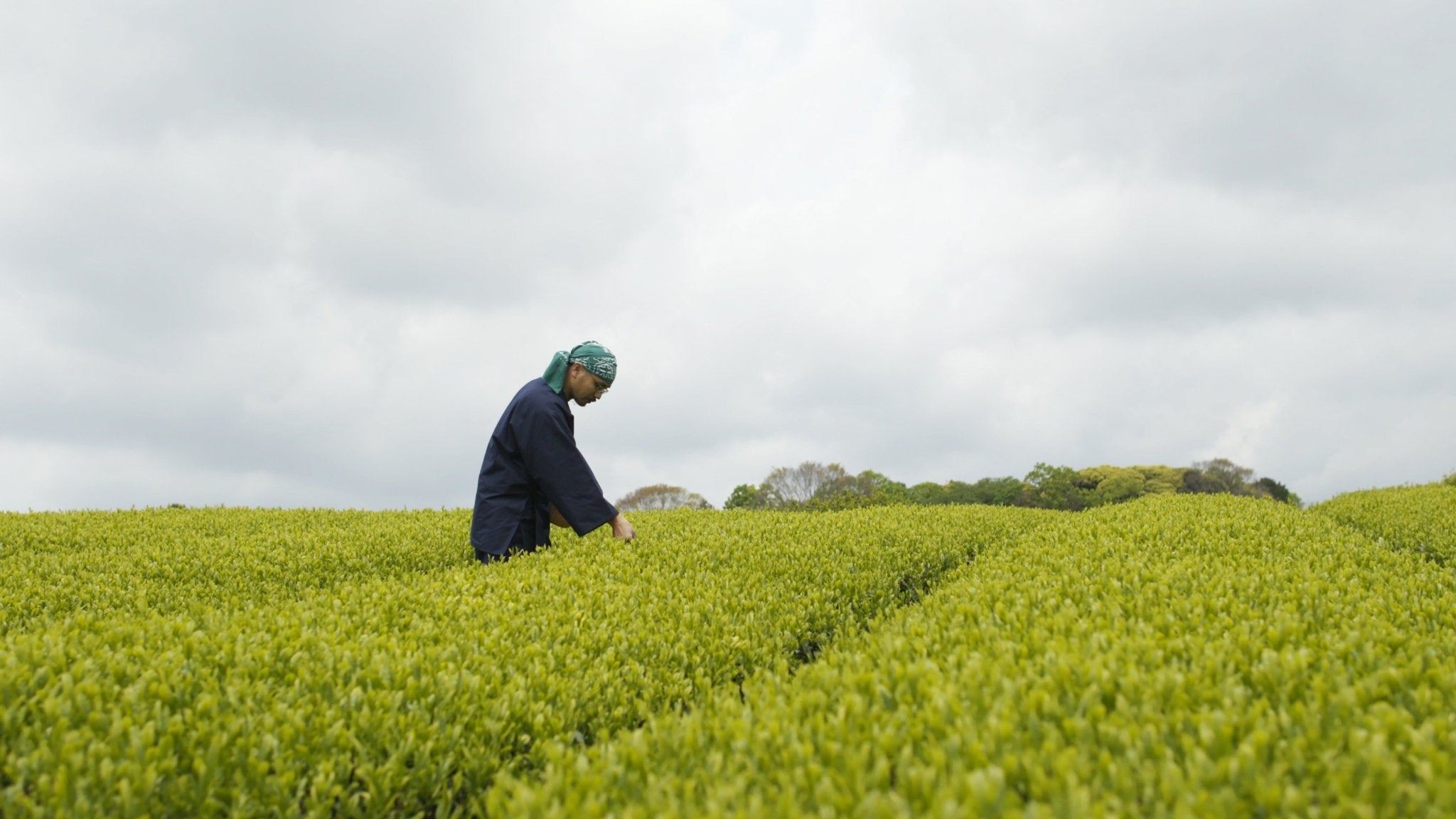
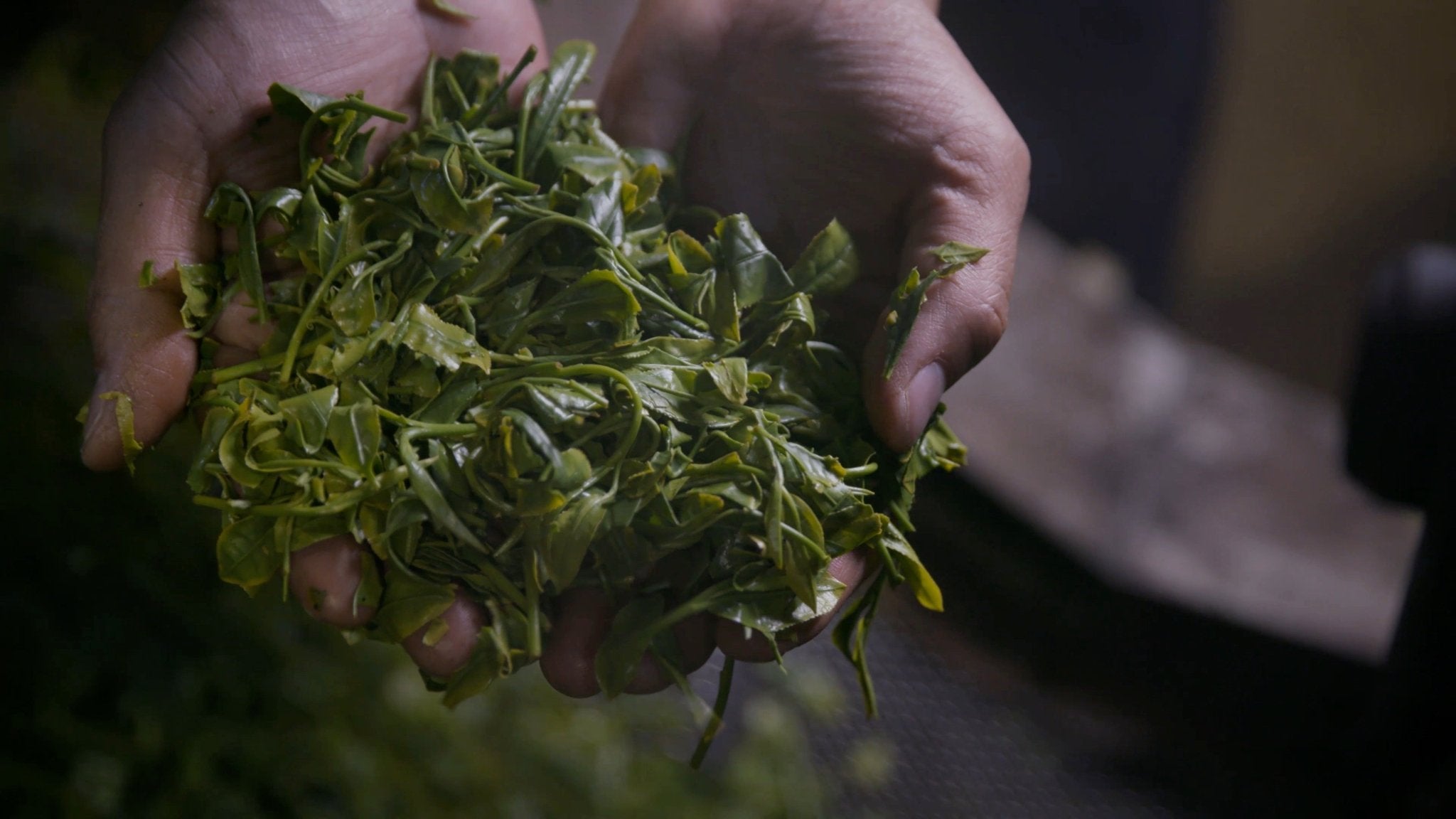
Freshly picked tea leaves begin changing immediately, so they are taken for processing soon after they are harvested. One of the first objectives is to stop enzymatic oxidation before it significantly alters the leaf. In Sencha production, this is usually done with steam.
The leaves then pass through a sequence of rolling and drying. At first, they still contain a great deal of moisture. Gradually, through mechanical pressure, movement and warm air, that moisture is reduced and redistributed. The leaves become thinner and more tightly rolled until they acquire the fine, needle-like appearance associated with Sencha.
The rolling is not only about appearance. Breaking down and shaping the leaf affects the way it later meets hot water, including how readily its contents are released during brewing.
At the end of these initial stages, the tea is known as aracha, literally “rough tea.” If you were to see aracha at this point, it would look less uniform than the Sencha usually sold in a tea shop. It contains stems, fine particles and leaves of different sizes.
It still needs to be finished.
During shiage, the aracha is sorted into more uniform components. Stems and finer material can be separated, different lots may be blended, and the leaves receive a final drying or firing. Exactly how this is handled depends on the tea the producer or wholesaler wants to create.
Steaming time also leaves a very visible mark. A shorter steaming tends to keep the leaves relatively intact. Leave them in the steam longer and their structure softens, so they break more readily during rolling. This is why some Sencha consists of long, distinct needles while another may contain a great deal of fine leaf.
Those differences will follow the tea all the way into the cup.

One of the clearest ways to see how processing changes Sencha is to compare different steaming styles.
The terms most commonly encountered are asamushi, chumushi and fukamushi: light-, medium- and deep-steamed Sencha. They are useful descriptions rather than perfectly rigid categories, and exact steaming practices differ between producers.
Asamushi means lightly steamed.
Because the leaves spend less time in steam, they retain more of their physical structure. After rolling and drying, they tend to remain comparatively long and well defined. Look into a pot after brewing and you can often still distinguish individual pieces of leaf quite easily.
The liquor tends to be clearer too. Depending on the tea, aromas can be delicate and the taste brisk, with astringency more noticeable than in a heavily steamed Sencha.
There is often a little more patience involved in brewing asamushi. Its relatively intact leaves release their contents differently from the finer material found in fukamushi, and the tea can develop gradually across several infusions.
Chumushi sits somewhere in the middle and is often treated simply as standard Sencha rather than identified explicitly on packaging.
The leaves receive more steaming than asamushi but retain more structure than a deeply steamed tea. The resulting cup often shares qualities with both: some of the clarity associated with lighter steaming, with more body and softness.
The boundaries are not exact. One producer’s chumushi may look noticeably different from another’s, and many Sencha are sold without any steaming designation at all.
Fukamushi means deeply steamed.
The leaves remain in steam longer, which softens them considerably. They become more fragile during rolling, leaving the finished tea with smaller fragments and much more fine material than you would normally find in asamushi.
Once water is added, the difference is immediate. Fine leaf particles pass through the teapot filter and enter the cup, creating the dense, cloudy green associated with fukamushi. These teas often have more body and can feel softer on the palate, with less pointed astringency.
They also infuse quickly. Because the leaves are more broken, water can extract from them readily. A short infusion may already produce a surprisingly strong cup, particularly on the second brew.
None of these styles represents a higher grade of Sencha. They are different approaches, and preference is personal. The contrast becomes especially obvious when asamushi and fukamushi are brewed next to one another.

There is no single answer to what Sencha tastes like.
Freshness is usually a good place to begin. Sencha often has a distinctly green quality in both its aroma and taste. Depending on the tea, you might be reminded of young leaves, steamed greens or fresh herbs. Some have a slightly marine note. Others lean much more toward sweetness.
Umami varies considerably too. Rather than appearing as an obvious flavor on its own, it can give the tea a fuller, savory quality and a lingering sensation in the mouth. Some Sencha have very little of it; in others, particularly teas made from tender leaves or certain cultivars, it can be prominent.
Then there is astringency.
For someone new to Japanese green tea, astringency can initially seem like something that has gone wrong. Excessive astringency certainly can be unpleasant, particularly when Sencha is brewed too hot or for too long. But some is entirely natural. That slightly drying sensation can give a Sencha its freshness and make the next sip appealing.
Sweetness, umami and astringency do not appear in fixed proportions. A brisk Sencha may have enough sweetness to soften its finish. Another can be rich in umami but still have a fresh edge. Some are light in taste but unusually aromatic.
Texture changes too. A lightly steamed Sencha may produce a clear liquor that feels relatively light in the mouth. Deep-steamed teas often contain tiny particles of leaf suspended in the infusion, giving them more body and their characteristic cloudy green appearance.
These differences begin in the field and continue through processing. Cultivar matters, as do the season and timing of harvest, where the tea was grown, the condition of the leaves and the decisions made after picking.
Brewing adds another variable. Take the same Sencha and lower the water temperature, and sweetness may become easier to notice. Brew it hotter or longer and astringency tends to come forward. The second infusion, with leaves already wet and open, can taste quite different from the first.
There is no need to master all of this before enjoying Sencha. It simply means that when a cup isn’t quite to your taste, the leaves may have more to give.

Sencha responds readily to small changes in brewing, but it does not need to be complicated.
Water temperature is one of the easiest things to experiment with. Very hot water extracts quickly, bringing more bitterness and astringency with it. Allow the water to cool and the resulting cup will generally be softer, with sweetness and umami easier to notice.
Infusion time and the amount of leaf can then be adjusted according to the tea and your preference. If a Sencha tastes sharper than you would like, try slightly cooler water. If it feels weak, adding a little more leaf is often more useful than simply leaving it to brew for much longer. Deep-steamed Sencha usually needs less time because its finer leaves release flavor quickly.
A kyusu, the Japanese teapot traditionally used for leaf tea, is particularly well suited to Sencha. Its filter keeps most of the leaves in the pot while allowing the liquor to be poured away quickly once the infusion is ready.
Try to empty the teapot fully. Water left sitting with the leaves will continue extracting between infusions, which can make the next cup unexpectedly strong.
And use the leaves again.
Sencha is generally brewed several times. The first infusion often has the most composed aroma and taste. The second can be much quicker and, because the leaves are already warm and open, surprisingly intense. Later infusions become lighter.
After brewing Sencha regularly, much of this stops feeling technical. You know when a particular tea wants cooler water. You learn that the fukamushi in your cupboard needs a very quick second infusion. You might deliberately make another Sencha a little stronger because that is simply how you prefer it.
At that point, you are no longer following instructions very closely. You are making tea.
Calling Sencha Japan’s most common green tea is accurate, but it can undersell what makes the tea interesting.
You can drink it every day and still find enormous variation within it. Change the cultivar, harvest, steaming or finishing and the character shifts. Travel from one growing region to another and it shifts again.
For someone beginning to explore Japanese tea, this makes Sencha an excellent point of entry. Through it, you encounter seasonality, cultivars, processing, brewing, regional differences and eventually the preferences of individual producers.
But Sencha does not need to remain a beginner’s tea.
Perhaps its greatest quality is that there is no real need to graduate from it. Familiarity makes small differences easier to notice. After enough cups, things that once seemed insignificant—a little more sweetness, a cleaner finish, the aroma rising from wet leaves—can become exactly what you pay attention to.
And tomorrow, you can make another pot.
If you are ready to begin exploring Sencha itself, our dedicated collection brings together teas produced by Honda Mohei, alongside Sencha we have selected from other tea makers throughout Shizuoka.
The 6 Tea Attributes: A Comprehensive Guide
Sencha: Japan's Most Popular Green Tea