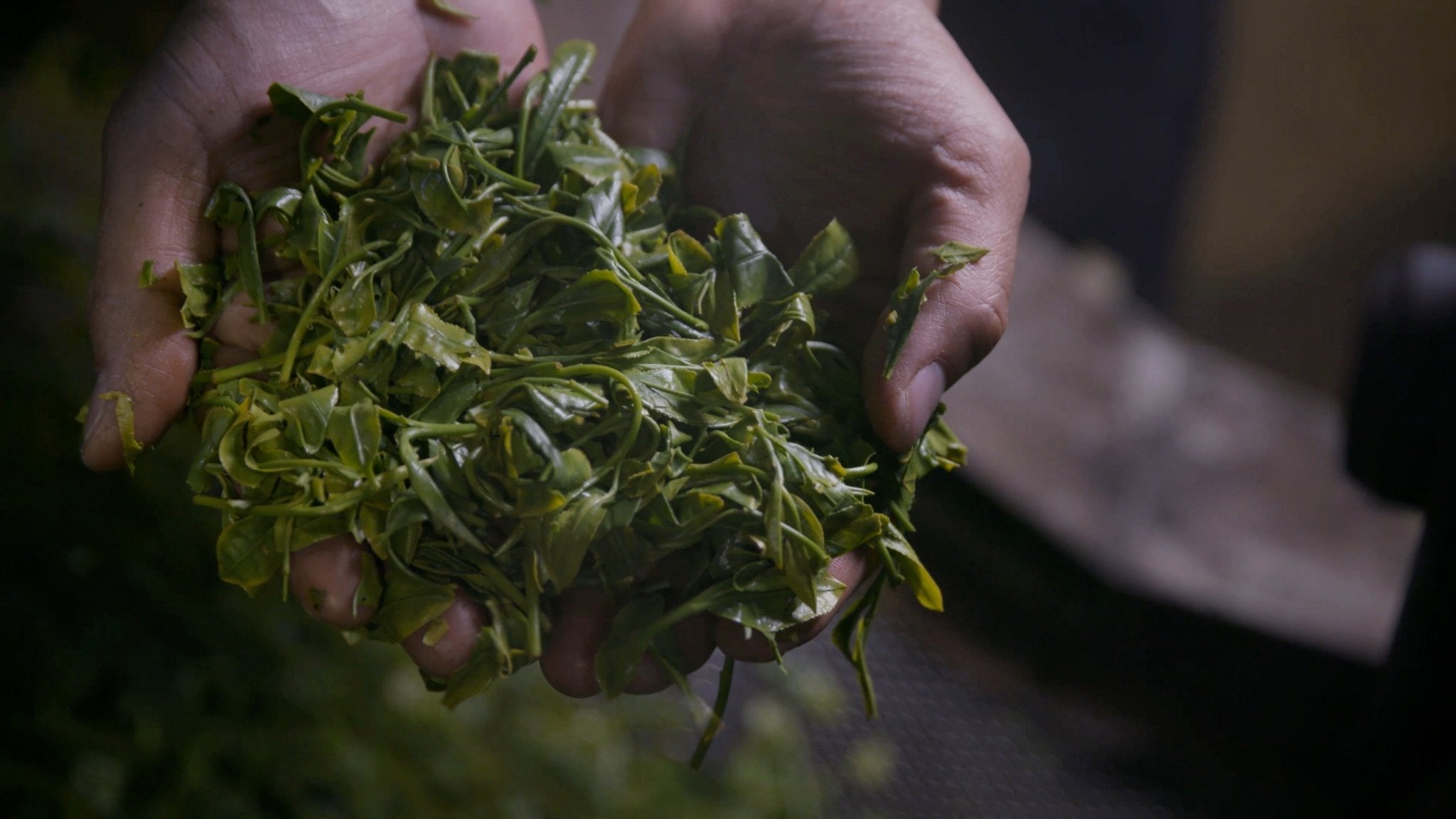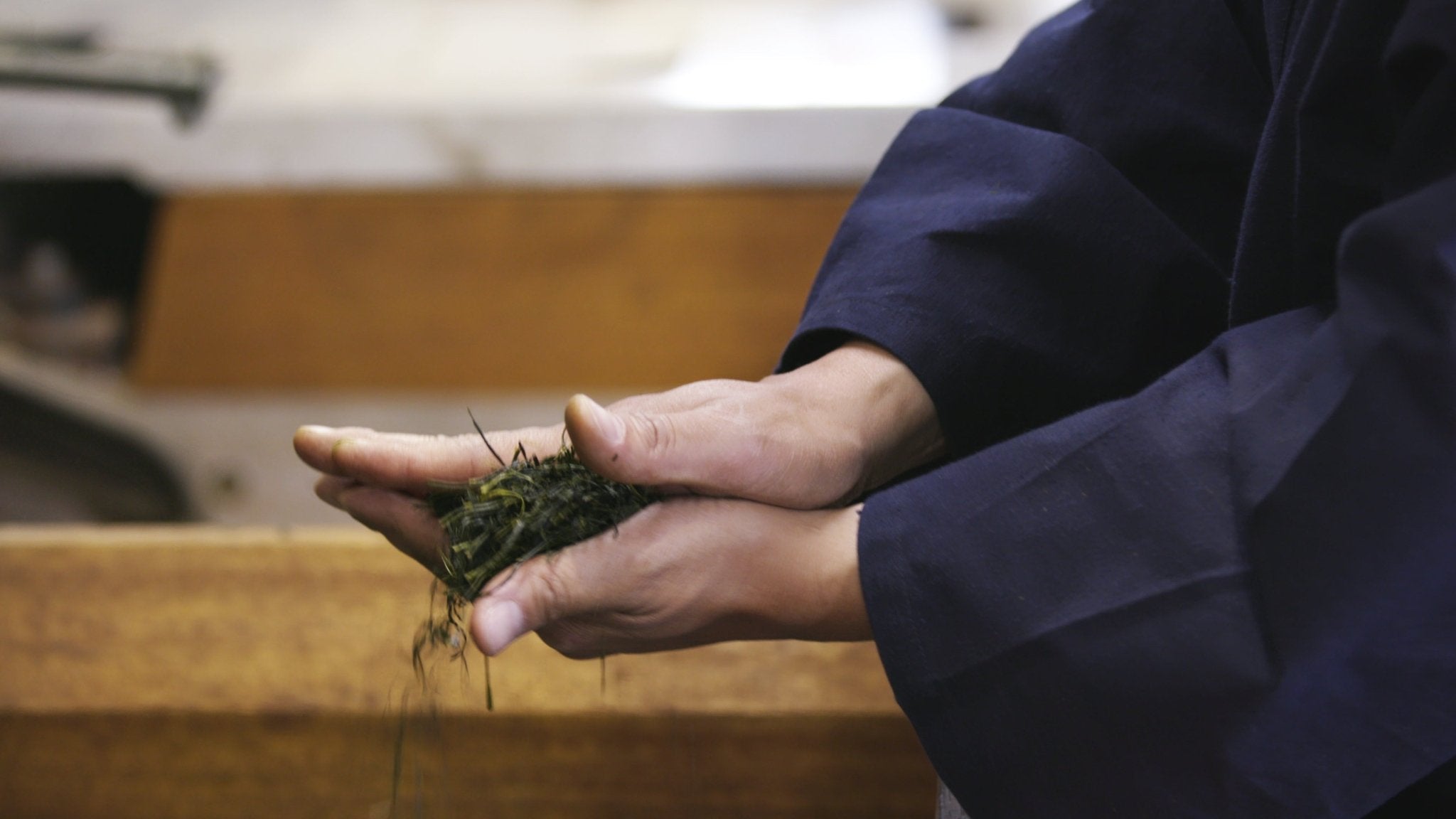
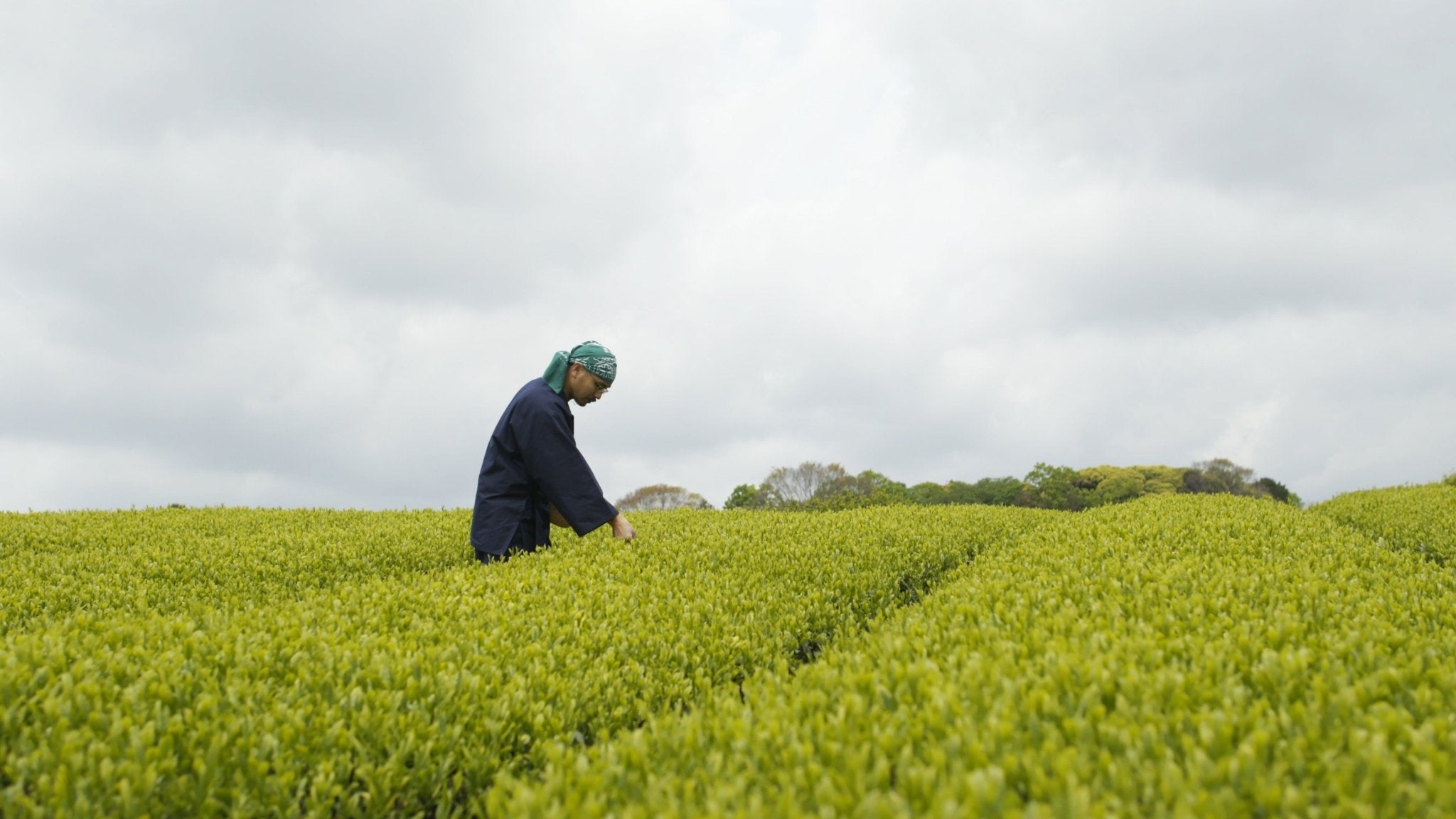
Every tea year has its turning point.
In Japan, that moment arrives with the first harvest of spring, when the tea fields awaken after winter dormancy and the year’s earliest new leaves are finally ready to be picked. This is the season of shincha, often translated as “new tea,” but understood by tea lovers as something more specific than novelty alone.
Shincha is not simply fresh tea in a generic sense. It is the first tea released from the first harvest, and for that reason, it carries a particular kind of immediacy in the cup.
To understand shincha is to understand something essential about Japanese tea itself: its deep relationship to seasonality, timing, and the subtle importance of first things.

At its most literal level, shincha means “new tea.” In practice, the term is most commonly used for the first tea made and released from the year’s earliest spring harvest. It is not a tea category in the same sense as Sencha, Gyokuro, or Matcha. Rather, it is a seasonal designation.
This is why shincha is often discussed alongside ichibancha, or first harvest tea.
The two are closely related, but they are not quite the same in emphasis. Ichibancha refers to the first flush harvest itself, in contrast to second or third harvests later in the year. Shincha, by contrast, refers to the tea first made available from that harvest.
In other words, ichibancha describes the picking; shincha describes the first new tea brought forward from it.
That distinction may seem small, but it helps clarify why shincha feels so specific. Tea from the first harvest does not necessarily appear only in the form of shincha. Some of that same harvest may be stored, finished, or released later in the year, and over time, its expression can settle into something calmer and more mature. Shincha, however, is valued for arriving early, close to the harvest itself, before that first energy has had much time to soften.
Shincha also unfolds according to geography. Harvest begins earlier in warmer southern regions and gradually moves northward as the season advances. In practical terms, this means shincha is not tied to a single national date; it appears as spring progresses across Japan’s tea regions. Some areas can begin offering shincha in April, while others, especially cooler or higher-altitude areas, reach that point later, in May, for example.
So while shincha is often spoken about as if it were a flavour or a style, it is better understood as a moment in the tea calendar expressed through tea. It is the first harvest made visible and drinkable; a seasonal beginning gathered leaf by leaf.
If you’d like a broader introduction to what defines Japanese tea first (how it is made, and why it tastes the way it does), you can begin with What Is Japanese Tea? A Complete Beginner’s Guide, then return here to explore shincha more closely.
Shincha matters in Japan because it marks more than the arrival of a tea. It marks the return of the tea year itself.
After the stillness of winter, the first harvest carries a particular emotional force. It is the moment when the fields begin speaking again, when months of care and waiting finally take form in the youngest leaves of the season.
For producers, that moment is charged with concentration and responsibility. For drinkers, it often carries anticipation of a different kind: not only the pleasure of tasting tea, but the pleasure of tasting this season’s beginning.
Its importance is also tied to the Japanese sense that seasonality matters most when it is brief. Shincha is valued precisely because it belongs to a narrow window. It is associated with freshness, immediacy, and the first expression of the year’s new growth.
Shincha’s significance is deepened further by its traditional connection to hachijuhachiya, the eighty-eighth night counted from the beginning of spring. This day, usually falling around early May, has long been regarded in Japan as auspicious. It marks a seasonal threshold, a moment historically associated with both agricultural vitality and good fortune. Tea picked around this time has been especially prized, and shincha linked to hachijuhachiya has long carried the sense of something timely in the fullest sense of the word.
And perhaps that is why shincha continues to matter so deeply. It reminds both producer and drinker that tea is not abstract. It has a season, a rhythm, and a right moment.

What makes shincha feel distinctive in the cup is not a single flavour, but a particular kind of energy.
This difference begins with the character of the young spring leaves themselves. Early growth tends to carry a certain tenderness and vitality, and when it is processed with care, that quality can remain perceptible in the finished tea.
The result is often a cup that feels lifted and alive, with a greenery aroma that many drinkers describe as one of shincha’s most memorable traits. First-harvest tea also tends to contain comparatively higher amino acid content, which can contribute to sweetness and umami. However, the exact balance always depends on cultivar, region, and producer choices.
At the same time, shincha is not defined only by softness or sweetness. In many cases, it also carries a youthful directness; a kind of brightness that makes it feel especially immediate. This is part of why shincha can leave such a strong seasonal impression. It often feels less “finished”, in the sense of mature depth, and more expressive in the sense of freshness and movement. Not incomplete, but alive in a different register.
That said, it would be misleading to suggest that all shincha tastes the same. A shincha from one region may feel very different from one produced elsewhere. Cultivar, weather, altitude, steaming style, and the tea maker’s own decisions all shape the final result. Some shincha lean toward sweetness and roundness, while others feel greener, brisker, or more aromatic.
The clearest way to understand shincha in the cup is this: it does not necessarily taste “better” than tea released later, nor does it always aim for greater depth. What it offers is something more specific — a sense of brightness, fragrance, and forward movement that belongs especially to the beginning of the season.
One of the easiest ways to misunderstand shincha is to assume that it must be a completely different tea from Sencha. In reality, many shincha are, in fact, Sencha. That is precisely why the distinction matters.
Sencha refers first and foremost to a style of Japanese green tea: leaves that are typically steamed after harvest, then rolled and dried into the familiar shape associated with everyday Japanese green tea. It is a category defined by production style.
Shincha, on the other hand, is defined by timing. It indicates that the tea comes from the earliest harvest of the year and is released in that first fresh window.
Seen this way, the difference is less about category than about perspective. When a tea is called Sencha, the emphasis is on “what kind of tea it is”.
When it is called shincha, the emphasis shifts to “when it was made” and “where it stands in the rhythm of the tea year”. In many cases, the same tea can truthfully be understood through both lenses: as a Sencha in style, and as a shincha in season.
This is also why “regular Sencha” is best understood not as the opposite of shincha, but as Sencha viewed outside that first-harvest moment. Once the tea year progresses and later harvests begin to appear, the focus naturally returns to style, origin, producer, or cultivar. The tea is still Sencha, but it is no longer being presented through the special lens of the year’s first arrival.

Part of shincha’s appeal lies in its inability to be separated from anticipation. Unlike teas that remain available as stable references throughout the year, shincha arrives with a sense of return. It belongs to a season, and because that season is brief, the tea is experienced not only for what it tastes like, but for the fact that it has come back at all.
For many tea lovers, this changes how they approach Shincha. It is not simply chosen from a shelf as one option among many. It is awaited. The first harvest carries with it the feeling that the tea year has begun again, and that the first expression of spring can now be encountered in the cup. Even before tasting, there is already an emotional charge: the memory of previous years, the curiosity about how this season will unfold, and the quiet pleasure of meeting something familiar in a new form.
This yearly expectation also reflects something deeper about how tea is appreciated in Japan. Value is not always found in permanence. Very often, in the precision of timing, and in the awareness that certain things matter more because they do not remain unchanged forever.
There is also a more intimate reason why people wait for it. Shincha gives tea lovers a way to feel the passage of the year through something tangible. The first sip is never only about flavour, it is also about recognition: the sense that spring has advanced far enough for the tea fields to speak again, and that the year’s first leaves have now crossed the distance from field to cup.
This is why shincha inspires such loyalty. It offers not only freshness, but recurrence. Not only tea, but the return of tea at the right moment. And for those who follow the seasons closely, that is reason enough to wait for it every year.

Shincha is often best enjoyed with a certain restraint. Because so much of its appeal lies in freshness, aromatic lift, and the vivid impression of the new season, it usually asks less for complexity than for clarity. The goal is not to push the tea, but to let it arrive gently in the cup.
For that reason, masters prefer to approach shincha with a lighter hand than they might use for more robust everyday teas. Water that is too hot or an infusion that goes on too long can easily pull the tea away from its most graceful register. What tends to suit shincha better is an attitude of attention: giving the leaves enough space, enough calm, and enough gentleness for their character to unfold without force.
It is also a tea that invites seasonality into the act of drinking itself. Shincha is rarely just “prepared”; it is often received at a particular time of the season or even the day.
A quiet morning, the first warm afternoons of spring, the sense that the air has changed; these small elements naturally become part of the experience. Even when the brewing is simple, the context gives the tea a special kind of presence.
And like many Japanese teas, shincha often reveals itself beautifully over more than one infusion.
The first cup may speak most clearly through aroma and immediacy, while the next begins to settle into something softer and more open. This gradual unfolding is part of its pleasure. Rather than trying to capture everything in the first pour, it is often better to stay with the tea for a little longer and let it show its different faces in sequence.
In spirit, enjoying shincha begins somewhere simpler: with freshness respected, with brewing kept gentle, and with enough stillness to notice that what you are drinking belongs not only to a style of tea, but to a season.
If you would like to experience that seasonal arrival for yourself, our Shincha Nº0 Kochi offers one expression of this first harvest moment, guided by the same attention to freshness, timing, and clarity that makes shincha so eagerly awaited each year.